

Today, patients often form their first impression of a doctor online before they ever visit a clinic.
When someone searches your name, they are not just looking for degrees — they are looking for clarity, confidence, and trust. Personal branding for doctors is no longer about promotion. It is about professional visibility, patient education, and reputation management done in an ethical way.
This guide explains personal branding in healthcare. It discusses why it is important in India today. It also shows how doctors can build a strong and trustworthy presence step-by-step.
Table of Contents
What Is Personal Branding for Doctors?
Personal branding for doctors and medical professionals shows and helps others remember your professional identity. This includes patients, peers, hospitals, and the public.
Not self-advertising. Professional communication is essential.
A doctor’s personal brand includes:
- Clinical expertise and niche
- Values and treatment philosophy
- Communication style
- Professional visibility across platforms
When these elements align, patients feel they understand your approach even before the first consultation.
Why Personal Branding Matters in Healthcare Today

Patients Research Doctors Before Booking
Across Indian cities, patients check Google reviews, websites, and social profiles before choosing a doctor. A weak or outdated presence can reduce trust instantly.
Trust Is Built Before the First Visit
Educational content and a professional online presence reduce anxiety and help patients feel more confident about their decision.
It Supports Practice and Career Growth
A strong personal brand can lead to:
- Higher-quality patient enquiries
- Better recall among referring doctors
- Invitations to conferences and panels
- Academic and institutional opportunities
It Protects Your Reputation
If you do not manage your digital presence, third-party platforms and search engines will define it for you. Proactive visibility ensures accurate information appears when someone searches your name.
The 4 Pillars of a Strong Doctor Personal Brand
Authority
Built through qualifications, clinical experience, research, and educational content.
Authenticity
Your online presence should reflect who you truly are in practice. Honest communication builds long-term trust.
Awareness
Being visible to the right audience — patients, peers, and institutions — through consistent presence on selected platforms.
Audience Alignment
Understanding exactly whom you serve best and tailoring your communication to their needs, language, and concerns.
Step-by-Step Guide to Building Your Personal Brand in 2026
Step 1 – Define Your Professional Identity and Niche
Clarify:
- The type of patients you help
- Conditions or procedures you are known for
- What makes your approach different
Create a one-line positioning statement that becomes the base of your website and profiles.
Step 2 – Build a Professional Website (Your Digital Clinic)
Your website should clearly show:
- Qualifications and experience
- Specialties and services
- Clinic locations and timings
- Patient education resources
- Contact and appointment options
A mobile-friendly, fast website with clear “Book Appointment” options is essential.
Step 3 – Optimise Your Google Business Profile
For local searches, your Google profile is critical. Ensure it has:
- Accurate specialty and categories
- Updated contact details
- Clinic and doctor photos
- Services list and FAQs
- Genuine patient reviews
Step 4 – Choose the Right Social Platforms
You do not need to be everywhere. Focus on platforms where patients are active.
- LinkedIn for professional visibility
- Instagram for short health tips and awareness
- YouTube for detailed explanations
- Facebook for local communities
Keep branding consistent across all platforms.
Step 5 – Share Educational Content
Educational posts build trust more effectively than promotional posts.
Content ideas include:
- Things patients should know before a procedure
- Common myths about conditions
- When to consult a specialist
- How you approach treatment
Short videos, simple infographics, and blog posts work well.
Step 6 – Use Patient Stories Ethically
You may share:
- Written testimonials with consent
- Anonymous case journeys
- Educational before–after examples where permitted
- Always respect privacy and avoid promising outcomes.
Step 7 – Manage Your Online Reputation
Regularly:
- Check search results for your name
- Respond professionally to reviews
- Update outdated information
- Keep posts professional and neutral
Step 8 – Align Offline and Online Experience
Ensure that your clinic experience, staff communication, and printed materials match the professionalism reflected online.
Ethical and Legal Considerations in Doctor Branding
Healthcare communication must always follow ethical standards.
Key Principles to Follow
- Never guarantee treatment outcomes
- Avoid sensational or exaggerated claims
- Protect patient confidentiality
- Use educational, not promotional language
- Follow medical council advertising guidelines
A strong personal brand should reinforce professional ethics, not challenge them.
Personal Branding for Doctors by Medical Specialty
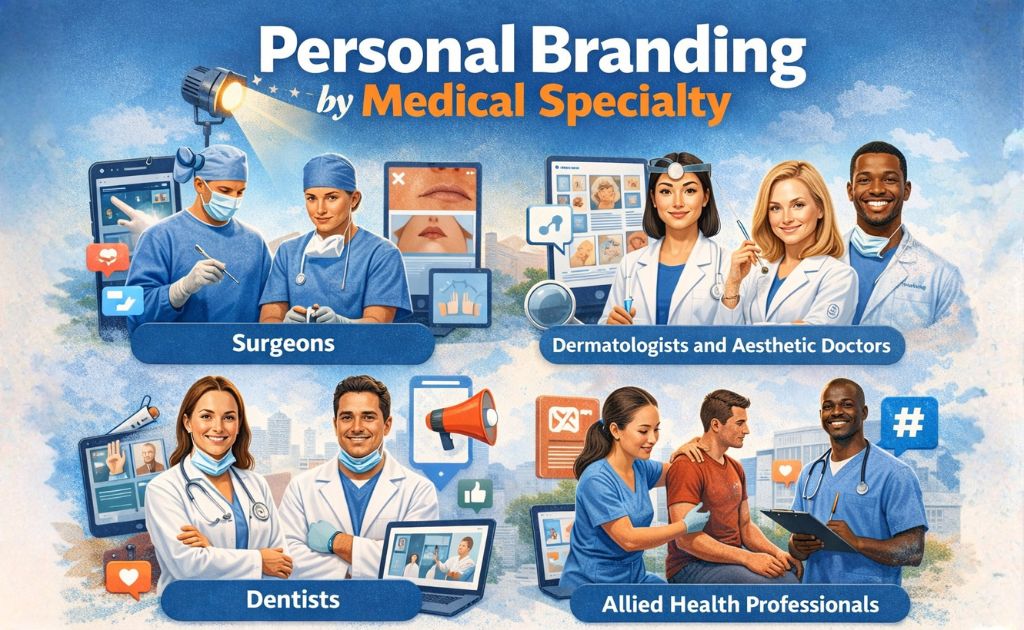
Surgeons
Focus on safety, clarity, and recovery education.
Dermatologists and Aesthetic Doctors
Use visual education and realistic expectation-setting.
Dentists
Explain procedures simply to reduce fear and increase acceptance.
Allied Health Professionals
Physiotherapists, nutritionists, psychologists, and nurses can highlight long-term care and patient support.
How The Crown Media Helps Doctors Build a Strong Personal Brand
The Crown Media works with medical professionals to build ethical, patient-focused digital visibility through:
- Brand positioning and niche clarity
- Healthcare-specific website design
- Google profile optimisation and reputation management
- Educational content strategy
- Ongoing performance tracking and improvement
Final Thoughts
In 2026, personal branding for doctors is not about popularity — it is about professional trust.
When patients understand who you are, what you stand for, and how you care, they approach treatment with greater confidence. That trust is the foundation of meaningful, long-term patient relationships.